
Tell us about your path to Baltex.
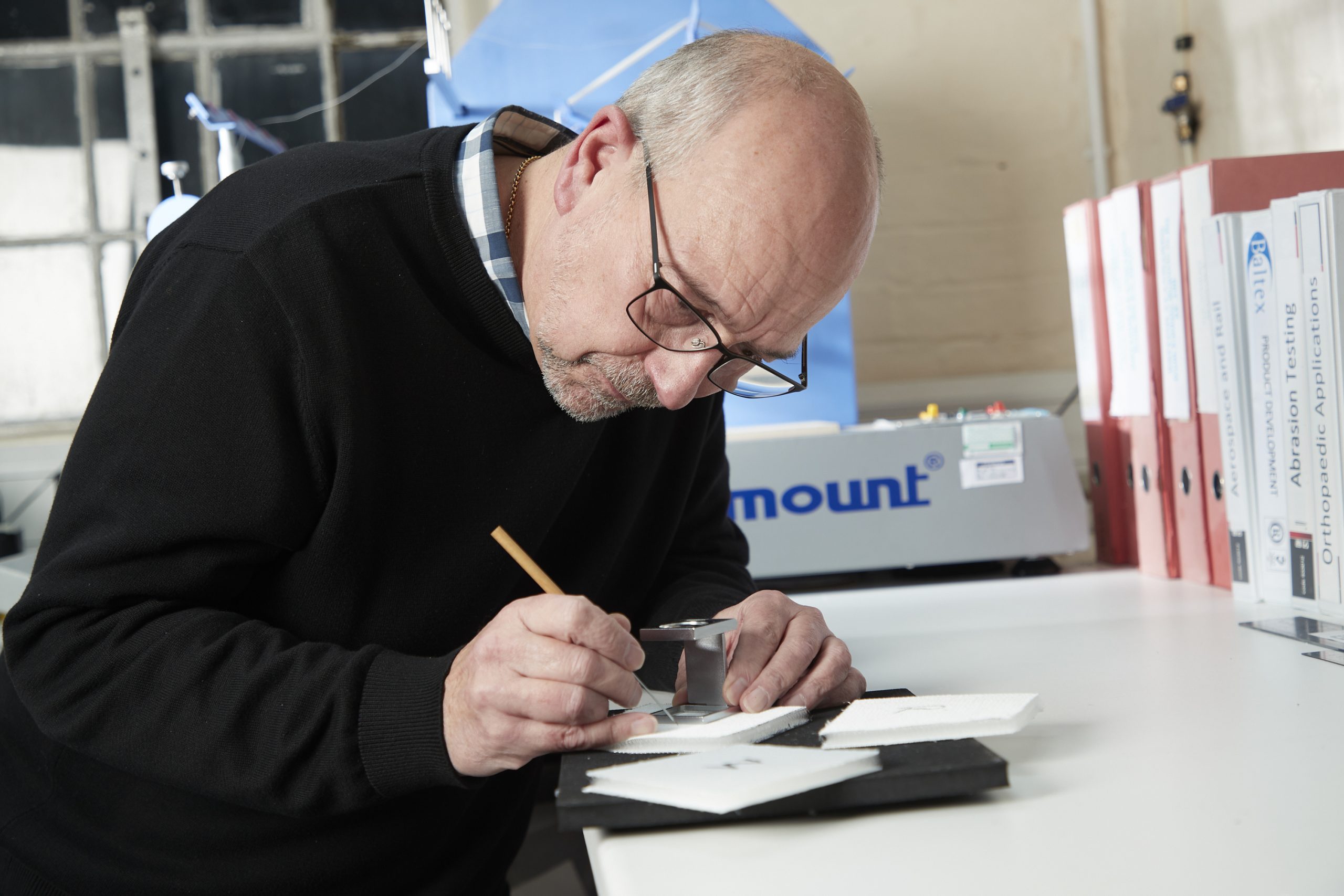
My career in technical textiles and materials began in 1988 when I completed an Associateship of the Textile Institute qualification (equivalent to a degree) in Textile Technology from the Bolton Institute of Higher Education. I then worked in the industry for a while before gaining my first PhD, also in Textile Technology, from Leeds University in 1999. Here my research focused on the moisture transmission in flame-retardant fabrics for firefighters’ uniforms.
I then worked in the textile industry for a while but was made redundant so I trained as a teacher and taught design and technology at a secondary school for nine years.
I left to do a second PhD in Textile Technology at Bolton University from 2014-2018, researching Spacer fabrics with Baltex. Charles Wood (Director of Baltex), who was my research sponsor, was a big influence as we shared a passion for innovation and new ways of doing things. He was very supportive of my work and offered me a job in Quality towards the end of my PhD.
I took on the role of Quality Assurance Engineer in 2018 before my current role as Quality Assurance & Environmental Manager from 2023.
Tell us more about your research for Baltex.
This was researching the viability of using Baltex’s Spacer fabrics as an alternative to foam in pressure-relieving wheelchair cushions. Baltex supplies Spacer fabrics to its subsidiary Airospring, which mainly produces cushions and mattress toppers for the medical industry. It has now also entered the outdoor leisure industry.
My research looked at how we could achieve the same quality and comfort as foam cushions but using these more sustainable, recyclable materials. While foam is essentially a flat solid structure, Spacer fabrics have a 3D structure and you can use different layers of different thicknesses to do different things. The shaped 3D cushion I designed from that research is on sale, which I’m really proud of, and has a patent attached to it.
Quality and standards are a big deal for Baltex. How are these maintained?
I manage the Quality Management System (QMS) across all our UK sites. This means ensuring quality control from the raw materials to the manufacturing process and delivery. Our system is certified under the ISO 9001 quality standard to guarantee we can consistently meet our customers’ expectations. I also liaise with our Polish site, which is a finishing and delivery hub, via its Quality Manager Kinga Seta.
The Environmental Management Systems (EMS) plan is my baby which I wrote from scratch. An external auditor at the time said it looked like a mature system even though it was newly created and commented how enthusiastic staff were in getting on board with it, so I’m really proud of its impact.
The EMS is certified under quality standard ISO 14001 which has a wider scope than just environmental regulations and waste management. It also involves legal documentation and compliance including things like health and safety and chemical usage.
It’s a balancing act keeping both systems going at the same time.
Where are the challenges?
It’s a constant learning curve. Rules and regulations can change quite rapidly – the rules on the use of chemicals changes monthly – so it’s important to stay on top of the latest updates and training. Baltex is based in the UK and Poland but our clients and in turn their customers are global, so monitoring regulations worldwide is key.
The legal implications of not complying are significant for both us and our customers, so myself and colleagues Darren Haney, Paul Gretton and Kim Swaby monitor both the QM and EM systems at all times. We also work with other agencies to stay updated on draft, amended or new UK and global legislation so we can monitor and track developments and address implications.
There are also a lot of factors to consider when we talk about sustainability. For example, our components may be recyclable when they leave our factory but the end product created by a customer after any additional manufacturing may not have environmental compliance. We have to ensure our customers understand how this works.
Customers can also request an audit of us – their supplier – and the products we supply them, which can form part of their contract, or as an ad hoc request. This can be quite time-consuming but we always welcome these enquiries.
Where do you get job satisfaction from?
Getting feedback from customers thanking you for exceeding their expectations is always great to hear. I also really enjoy helping customers understand the right solution for their needs as there are many factors to navigate when textiles are involved.
Also, I like that we sell our textiles into areas that really matter, critical places like the medical profession where the products we make can make a difference. For example, during the pandemic we made masks which had a particular anti-viral finish. I am a volunteer for St John Ambulance so it’s important I was part of such efforts to help the community.
Does your charity work influence your Baltex role, and vice versa?
I started with St John Ambulance as a cadet from the age of 12 and have also been ambulance crew. I’m now involved with training the trainers and supporting the training officers who hold courses across the country. My skills with the charity fed in to creating the health and safety training programs at Baltex, and I help as part of a team to implement the quality assurance aspects to help improve education and training at St John Ambulance.
How will your role evolve in the future?
We’re exploring how to integrate the Quality and Environmental systems into one main system so we can create greater efficiencies for the business and our customers. We also want to ensure more of our people are trained to use these systems so we can be more agile for customers.
We can also expect compliance requirements to become more intensive as demand for sustainable products and processes increases. Our systems can help customers prepare for and navigate this.
Your role is clearly demanding and complex. How do you unwind?
I like hiking and rock climbing, and of course my voluntary work for St John Ambulance. The latter actually led me to meeting King Charles this May at his annual Garden Party for the education community. I took my Mum, who used to be a nurse, who had a chat with him and shook his hand. No, there wasn’t time to check out the textiles at Buckingham Palace – but my hat was recycled!
Find out more about Baltex here.